
Where to Start When Your AC Won't Turn On
Article content and related resources
Master AC troubleshooting tips before calling a professional: check power, filters, thermostat & more for Central Coast homes. Fix it fast!
Before You Call a Technician: AC Troubleshooting Tips That Actually Work
AC troubleshooting tips before calling a professional can save you real time and money — and more often than not, the fix is something you can handle yourself in under an hour. According to HVAC experts, nine times out of ten, a central air unit that isn't working well has a dirty filter. That's it. No technician needed.
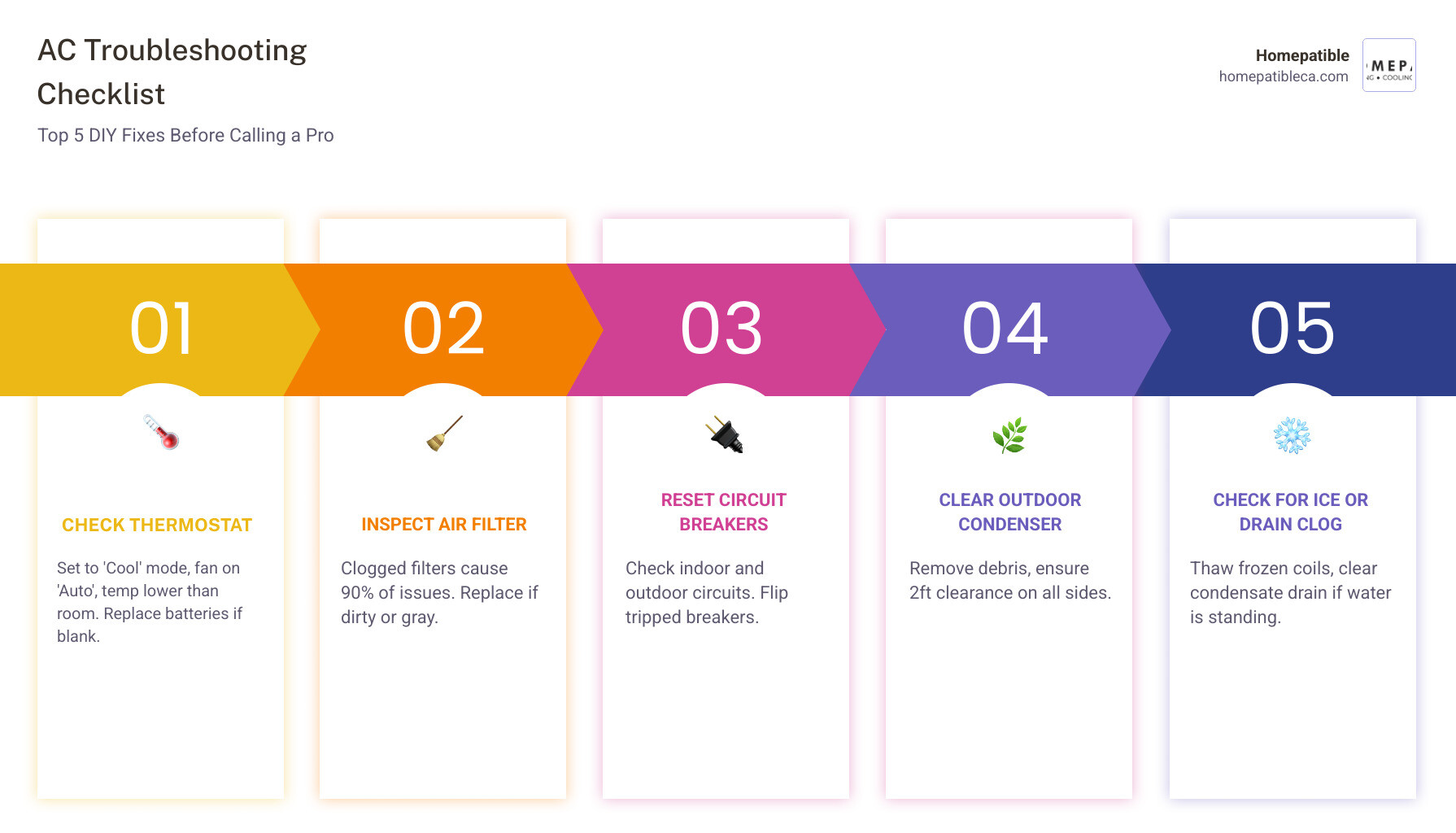
Here are the most important checks to run first:
- Check your thermostat — Make sure it's set to "Cool," the fan is on "Auto," and the temperature is set lower than the current room temperature. Replace the batteries if the screen is blank.
- Inspect the air filter — A clogged filter is the single most common cause of AC problems. Pull it out and replace it if it looks gray or dirty.
- Reset your circuit breakers — Central AC systems run on two separate circuits (indoor and outdoor). Check both in your electrical panel and reset any that have tripped.
- Clear the outdoor condenser unit — Remove leaves, dirt, or overgrown vegetation. Keep at least 2 feet of clearance on all sides.
- Look for ice on the indoor unit — If you spot frost or ice buildup on the refrigerant lines or coils, turn the system off and let it thaw before restarting.
- Check for a clogged condensate drain — Standing water around your indoor unit often means a blocked drain line. This can even trigger an automatic shutoff on some systems.
- Make sure all vents are open — Closed or blocked supply vents restrict airflow and can cause the whole system to underperform.
If you've worked through all of these and the system still isn't cooling properly, that's when it's time to bring in a licensed HVAC technician.
Most Central Coast homeowners in Santa Barbara and San Luis Obispo County are surprised to find that a simple filter swap or breaker reset is all it takes to get their AC running again. But when the problem runs deeper — think refrigerant leaks, electrical faults, or compressor issues — DIY fixes can make things worse. This guide walks you through every step so you know exactly what you're dealing with before picking up the phone.
Essential AC Troubleshooting Tips Before Calling a Professional
When your air conditioner stops working on a sweltering afternoon in Santa Maria or Goleta, the immediate reaction is often a bit of panic. However, many cooling issues are caused by simple, external factors rather than a total mechanical failure of the system. By following a structured approach to ac troubleshooting tips before calling a professional, you can often restore comfort to your home without the need for a service visit.
The cooling cycle relies on a delicate balance of airflow and electrical precision. If air can't move through the system, or if a safety switch has been triggered, the unit will shut down to protect itself. Start by looking for the obvious: are your vents blocked by furniture? Is the thermostat screen blank? These minor details are responsible for a large percentage of "no-cool" calls.
If your system is running but failing to drop the temperature, you might need to look at How to Fix AC Not Cooling with 5 Easy Changes to see if a quick adjustment can get you back to the "20-degree rule"—the standard that says your AC should be able to keep your indoor air about 20 degrees cooler than the outdoor temperature.
Checking Your Power Supply and Thermostat Settings
It sounds simple, but you would be amazed at how many service calls end with the technician simply flipping a switch or changing a battery. Before you assume your compressor has given up the ghost, you need to verify that the system is actually receiving power and that the "brain" of the operation—the thermostat—is functioning correctly.
Power surges are common during Central Coast heatwaves when the grid is under heavy load. These surges can trip breakers or blow fuses meant to protect your expensive HVAC equipment. If you’ve recently had a new system put in, or are considering one, Everything You Need to Know About AC Installation in San Luis Obispo covers how modern systems are wired for maximum safety and efficiency.
Thermostat Settings: AC Troubleshooting Tips Before Calling a Professional
Your thermostat is the command center. If it isn't set correctly, the rest of the system won't budge.
- Mode Check: Ensure it is firmly set to "Cool." Sometimes, during the transition from our cool Central Coast nights to warm days, the system gets left in "Heat" or "Off."
- Temperature Differential: Set the target temperature at least 3 to 5 degrees below the current room temperature to "call" for cooling.
- The Fan Switch: Set the fan to "Auto" rather than "On." When set to "On," the fan runs constantly, even when the AC isn't cooling, which can blow humid, unconditioned air back into your home.
- Smart Home Integration: As Nest Pro Elite technicians, we often see smart thermostats that have lost their Wi-Fi connection or have a "comfort schedule" that was overridden by another family member. Check your app to ensure no schedules are conflicting with your current needs.
Residents in areas like Callender often deal with specific coastal humidity issues that can affect how a system feels; for more on this, check out What Every Callender Resident Should Know About Central Air Installation.
Inspecting Circuit Breakers and Outdoor Disconnects
Central air systems are heavy power users, and they typically run on two separate circuits. One controls the indoor blower unit (usually located in a closet, attic, or garage), and the other controls the outdoor condenser.
- The Electrical Panel: Locate your home's main breaker box. Look for switches labeled "AC," "HVAC," or "Condenser." If a breaker is in the middle position, it has tripped. Flip it all the way to "Off" and then back to "On."
- The Indoor Switch: Most indoor units have a flip switch nearby that looks like a standard light switch. This can easily be bumped into the "Off" position during cleaning or while moving items in a garage.
- The Outdoor Disconnect: Near your outdoor unit, there is a small metal box mounted on the wall. This contains a disconnect switch or a pull-out fuse block. Ensure the switch is on and, if you are comfortable doing so, check for blown fuses.
If you are in the North County area and find that your electrical issues are persistent, AC Installation in Buellton: Chill Out with the Best HVAC Solutions offers insights into how a properly powered and installed system should behave.
Restoring Airflow: Filters, Vents, and Outdoor Units
Air conditioning isn't just about "creating cold"; it's about removing heat. To do that, your system needs to move a massive volume of air. Anything that slows that air down—a dirty filter, a blocked vent, or a leaf-clogged outdoor unit—will cause the system to struggle, overheat, and eventually shut down.
In our experience serving Santa Barbara and San Luis Obispo Counties, airflow is the number one culprit behind system inefficiency. Learning The Central Coast Homeowner's Guide to Spotting AC Trouble Early can help you identify these airflow restrictions before they lead to a total breakdown.
Air Filter Maintenance: AC Troubleshooting Tips Before Calling a Professional
The air filter is your system's first line of defense. Its job is to catch dust, pet dander, and debris before they can coat the sensitive internal coils.
- The Monthly Rule: As of April 2026, we recommend checking your filter every 30 days, especially if you have pets or live in dustier areas like Lompoc or Santa Maria.
- MERV Ratings: While high-efficiency filters (high MERV ratings) catch more particles, they also restrict airflow more than standard filters. Ensure your system is rated to handle the filter you choose.
- Replacement: If you hold the filter up to a light and can't see through it, it’s time for a change. A dirty filter can cause the evaporator coil to freeze, leading to a much more complex repair.
For those planning long-term home improvements, we've put together a Don't Sweat It: Your Lompoc AC Installation Roadmap that emphasizes the importance of accessible filter locations.
Clearing Debris from the Outdoor Condenser
The outdoor unit (the condenser) is where the heat from your home is released into the atmosphere. If the metal fins on this unit are clogged with dirt, grass clippings, or spider webs, the heat has nowhere to go.
- Landscaping Clearance: Maintain at least 2 to 3 feet of clear space around the unit and 5 feet of clearance above it. Trim back any bushes or low-hanging branches.
- Gentle Cleaning: After turning off the power at the disconnect, you can use a garden hose with a gentle stream to rinse away dirt from the fins. Never use a pressure washer, as it will bend the delicate aluminum fins and permanently restrict airflow.
- Bent Fins: If you notice large areas of flattened fins, you can purchase a "fin comb" to carefully straighten them, though this is often a job best left to those with a steady hand.
Maintaining this unit is one of the best ways to keep your AC repair services in San Luis Obispo on a budget, as it prevents the compressor from overworking and burning out prematurely.
Managing Frozen Coils and Clogged Drain Lines
If you notice water pooling around your indoor unit or see actual ice forming on the copper refrigerant lines, you have a "frozen" system. This usually happens because of restricted airflow (that dirty filter again!) or low refrigerant levels.
How to safely thaw your system:
- Turn the thermostat to "Off."
- Turn the Fan setting to "On" (not Auto). This blows warm house air over the ice to melt it.
- Wait 2 to 4 hours. Do not attempt to scrape the ice off, as you will likely puncture the refrigerant lines.
While the system thaws, check your condensate drain line. This is the PVC pipe that carries moisture away. If it gets clogged with algae or "sludge," the water will back up. Many modern systems have a "float switch" that will shut the whole AC down if it detects standing water in the drain pan. You can often clear a minor clog by using a wet/dry vacuum on the end of the drain line outside or by flushing the line with a cup of distilled white vinegar.
| Maintenance Task | DIY Friendly? | Frequency | Why It Matters |
|---|---|---|---|
| Replace Air Filter | Yes | 1-3 Months | Prevents coil freezing and improves air quality |
| Clear Outdoor Debris | Yes | Seasonally | Ensures heat can escape the system |
| Flush Drain Line | Yes | Twice a Year | Prevents water damage and system shutoff |
| Check Refrigerant | No | Annual Pro Check | Requires EPA certification; fixes "warm air" issues |
| Electrical Testing | No | Annual Pro Check | Prevents fire hazards and motor failure |
When DIY Isn't Enough: Signs You Need an HVAC Expert
While we love empowering homeowners with ac troubleshooting tips before calling a professional, there are certain situations where "doing it yourself" is dangerous or could void your warranty. The average HVAC lifespan is about 15 to 20 years, but once a system hits year 12, minor breakdowns become more frequent.
Call Homepatible immediately if you notice:
- Strange Noises: Squealing, grinding, or loud banging sounds often indicate a failing motor or a broken fan blade.
- Burning Smells: An ozone or "electrical fire" smell is a major red flag for shorted wiring or a failing circuit board.
- Hissing Sounds: This usually indicates a high-pressure refrigerant leak. Refrigerant is a regulated chemical that requires EPA Section 608 certification to handle.
- Frequent Short Cycling: If the unit turns on and off every few minutes, it could be an electrical fault or a severely oversized system.
- System Age: If your unit is over 15 years old and requires frequent repairs, it may be more cost-effective to discuss a replacement.
Frequently Asked Questions about AC Troubleshooting
Why is my AC running but not blowing cold air?
This is most often caused by a dirty air filter or a dirty outdoor condenser unit. If airflow is restricted, the heat exchange process can't happen. If the air is coming out of the vents but feels room temperature, you may have a refrigerant leak or a failed compressor capacitor.
How do I safely thaw a frozen evaporator coil?
Turn the AC off at the thermostat but turn the fan to the "On" position. This allows the fan to circulate warm air over the coils without the cooling cycle adding more ice. Let it sit for at least 4 hours. Once thawed, change your air filter before trying to run the AC again.
What are the signs of a refrigerant leak in my system?
Common signs include a hissing sound near the indoor or outdoor unit, ice buildup on the copper lines, and a noticeable decrease in cooling power despite the system running constantly. Because refrigerant is a hazardous material, you must call a licensed professional to find and repair the leak rather than just "topping it off."
Conclusion
Taking the time to run through these ac troubleshooting tips before calling a professional is the smartest move a Central Coast homeowner can make. Whether you're in the rolling hills of Paso Robles or the coastal breeze of Carpinteria, understanding the basics of your home's cooling system helps you stay in control of your comfort.
At Homepatible, we pride ourselves on being the Central Coast’s one-call solution for home system comfort. Our licensed Nest Pro Elite technicians are experts in both traditional HVAC and the latest smart home technology. We serve all of Santa Barbara and San Luis Obispo Counties with 24/7 emergency response and a commitment to transparent, upfront pricing.
If your troubleshooting leads you to a problem that requires a professional touch, we're here to help. We’ll get your home back to being a sanctuary from the heat, making it smarter, safer, and more efficient.
Ready to take the next step?
Our certified technicians are ready to help with all your home service needs. Schedule a service today.
Schedule My ServiceRecent Posts
Related Articles
Ready to Get Started?
Whether you need a repair, maintenance, or a new system, our expert team is here to help.