
The Central Coast Homeowner's Guide to Spotting AC Trouble Early
Article content and related resources
Spot signs your ac needs repair on the Central Coast early. Learn coastal humidity impacts, warning signs & maintenance tips to avoid breakdowns.
Is Your AC Trying to Tell You Something? Know the Signs Before It Breaks Down
Signs your ac needs repair on the central coast are easier to spot than most homeowners realize — if you know what to look for. Whether you're in Santa Barbara, San Luis Obispo, or anywhere in between, your AC system works hard against the unique combination of coastal humidity, marine layer moisture, and seasonal heat that defines life here. And when something starts going wrong, it usually gives you a warning first.
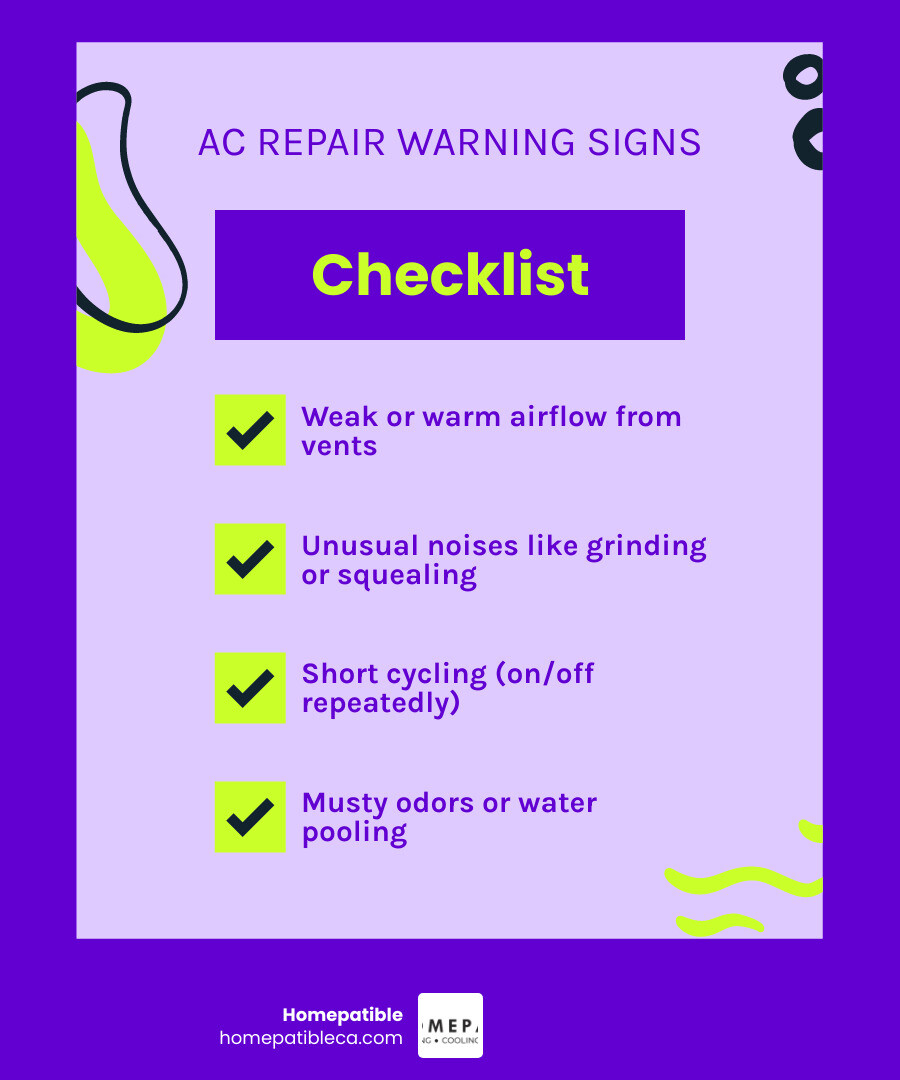
Here's a quick-reference list of the most common signs your Central Coast AC needs repair:
- Warm or weak airflow from vents despite the thermostat being set low
- Unusual noises such as grinding, banging, squealing, or rattling
- Short cycling — the unit turns on and off repeatedly without reaching your set temperature
- Musty or burning odors coming from vents
- Water pooling around the indoor unit or visible ice on the evaporator coils
- Sudden spike in energy bills with no clear explanation
- Uneven cooling across rooms in your home
- Hissing sounds near the outdoor unit, which can indicate a refrigerant leak
Catching these warning signs early makes all the difference. A small issue like a clogged condensate drain or a dirty air filter can quietly snowball into a compressor failure or water damage if left unaddressed. And on the Central Coast, where AC systems deal with salt air corrosion and high humidity year-round, that timeline can be shorter than you'd expect.
Annual maintenance can help prevent up to 85% of the repairs your central air conditioner may ever need — which means most breakdowns aren't inevitable, they're just missed opportunities to act early.
The sections below walk you through each warning sign in detail, what's likely causing it, and what to do next.
Common Signs Your AC Needs Repair on the Central Coast

Living on the Central Coast in April 2026 means we are right at the doorstep of the warmer months. When you reach for that thermostat, you expect a crisp, refreshing breeze. However, if you notice weak airflow or, worse, warm air drifting from your vents, your system is waving a red flag.
Weak airflow often points toward a failing blower motor or a severely clogged filter. If the air is flowing but it isn't cold, you could be dealing with a refrigerant issue or a compressor that has seen better days. For residents needing AC Repair Service Santa Barbara, these symptoms are frequently the first indicators that internal components are struggling against the local heat.
Sometimes the issue isn't the mechanical parts at all, but the "brain" of the system. Thermostat calibration issues can cause the unit to misread indoor temperatures, leading to a home that never feels quite right. Whether you are in Santa Maria or looking for AC Repair Service Casmalia, checking the thermostat settings is a great first step, but persistent temperature swings usually require professional diagnostics.
| Feature | Normal Operation | Repair Indicator |
|---|---|---|
| Air Temperature | Consistently cold (approx. 15-20°F below ambient) | Lukewarm or varying temperatures |
| Airflow Strength | Strong, steady breeze from all vents | Weak, "pathetic" breeze or dead zones |
| Cycle Length | 15–20 minute cooling cycles | Turning off after 5 minutes (short cycling) |
| Sound Level | Steady, low hum | Grinding, banging, or screeching |
| Energy Usage | Predictable seasonal increases | Sudden, unexplained spikes |
Recognizing Subtle Signs Your AC Needs Repair on the Central Coast
Not every sign is as obvious as a total breakdown. Odors are a major clue that something is amiss inside your ductwork or the unit itself. Musty, "dirty sock" smells usually indicate mold or mildew growth within the evaporator coils or the condensate drain line—a common problem in our humid coastal environment.
On the more urgent side, if you detect a burning smell, it often means electrical components are overheating or wire insulation is deteriorating. If you are in the Lompoc area and notice these smells, our AC Repair Service Lompoc team recommends shutting the system down immediately to prevent a potential fire hazard or total motor burnout.
Why Ignoring Signs Your AC Needs Repair on the Central Coast Leads to Failure
It is tempting to ignore a small squeal or a faint rattle, but in the HVAC world, noises are the "check engine light" of your home.
- Grinding: Usually indicates worn-out bearings in the motor.
- Squealing: Often points to a slipping or fraying belt.
- Banging or Clanging: Suggests a loose part, like a connecting rod or a fan blade, is hitting other components.
If left alone, a $200 bearing repair can quickly escalate into a $2,500 compressor replacement. Mechanical seizure happens when these small friction points finally give out, often during the peak of a Central Coast heatwave when the system is under the most stress.
Why Coastal Humidity and Heat Impact Your System
The very things we love about the Central Coast—the salt spray, the marine layer, and the cool fog—are unfortunately the natural enemies of your air conditioner. Salt air corrosion is a significant factor for homes in places like Carpinteria and Montecito. Salt accumulates on the outdoor condenser fins, accelerating rust and reducing the unit's ability to release heat.
High humidity also forces your AC to work double duty. It isn't just cooling the air; it’s acting as a giant dehumidifier. This extra workload makes AC Maintenance in Hope Ranch: Everything You Need to Know essential. Without regular cleaning, the evaporator coils can become "gunked up," leading to refrigerant leaks. If you hear a hissing sound near your unit, that is often the sound of pressurized refrigerant escaping—a problem that requires a licensed technician to seal and recharge.
Short Cycling During Central Coast Heatwaves
When the temperature climbs in San Luis Obispo or Santa Ynez, your AC should run in steady cycles. If it starts turning on and off every few minutes, this is known as "short cycling." This is incredibly hard on your compressor and can shorten your system's lifespan by years.
Short cycling can be caused by anything from a faulty thermostat to an oversized unit that cools the air too quickly without removing humidity. Getting a Tune Up to Chill Out with San Luis Obispo AC Maintenance can help identify if your system is struggling with airflow or electrical issues before the next heatwave hits.
Clogged Condensate Drains and Frozen Coils
In our humid climate, your AC pulls gallons of water out of the air every day. This water is supposed to exit through a condensate drain line. However, dust and algae can create a drainage stoppage. When the water has nowhere to go, it can pool around your unit, causing property damage or triggering a safety switch that shuts the system down.
Even stranger is the sight of ice on an AC unit when it’s 85 degrees outside. Frozen evaporator coils usually happen because of restricted airflow (like a dirty filter) or low refrigerant. When the coils get too cold, moisture freezes on them, creating an ice block that completely blocks airflow.
How Maintenance Prevents Major System Failures
The statistic is staggering: annual maintenance can help you avoid up to 85% of common repairs. By catching a worn capacitor or a loose belt during a routine visit, we prevent the "domino effect" where one failing part destroys another.
For those in the northern part of our service area, scheduling an AC Maintenance Tune-Up San Luis Obispo is the best way to ensure your system survives the summer. Similarly, our AC Maintenance Santa Barbara services focus on cleaning salt deposits and checking refrigerant levels to maximize your system's 10-15 year lifespan.
One of the simplest things you can do is change your air filter. In coastal environments, we recommend checking them monthly. A dirty filter is the leading cause of "suffocated" systems that overheat and break down.
When to Repair vs. Replace Your Aging Unit
As your unit approaches the 10-to-15-year mark, you may face the "repair vs. replace" dilemma. We often suggest the $5,000 Rule: multiply the age of the unit by the cost of the repair. If the total exceeds $5,000, a replacement is usually the smarter financial move.
Another factor is the R-22 refrigerant phase-out. If your older unit uses this discontinued refrigerant, repairs involving leaks become incredibly expensive. Modern systems are significantly more efficient, often reducing the 12-27% of your power bill that goes toward cooling.
First Steps for Suspected AC Trouble
If you suspect your AC needs repair, don't panic. Take these three steps first:
- Check the Circuit Breaker: Sometimes a power surge trips the switch.
- Inspect the Air Filter: If it’s black or grey with dust, replace it immediately.
- Clear the Area: Ensure no shrubs or debris are blocking the outdoor condenser unit (keep a 18-inch clearance).
If these don't solve the problem, it's time for professional diagnostics from a reliable HVAC pro.
Frequently Asked Questions about Central Coast AC Repair
How often should I change my air filter in a coastal environment?
On the Central Coast, we deal with more than just dust; we have salt air and seasonal pollen. You should check your filter every 30 days. While some filters are rated for 3 months, high-usage months or homes with pets often require a fresh filter every 1 month to maintain airflow strength and indoor air quality.
What are the emergency warning signs that require immediate service?
You should call for 24/7 emergency service if you experience:
- Burning odors or sparks from the unit or electrical panel.
- Total cooling failure during extreme heat, especially if infants or elderly residents are present.
- Significant water leaks that threaten to damage your flooring or drywall.
- A loud, persistent screeching noise (which could indicate high pressure in the compressor).
Why is my energy bill suddenly so high?
If your usage hasn't changed but your bill has spiked by 20% or more, your AC is likely losing efficiency. This is often caused by worn-out capacitors, low refrigerant, or extremely dirty coils that force the motor to run longer and harder to achieve the same cooling effect. Regular maintenance can save you significantly on these monthly costs.
Conclusion
At Homepatible, we understand that your home is your sanctuary. Whether you are dealing with a "banshee" on the roof or a system that’s blowing nothing but warm air, our licensed Nest Pro Elite technicians are ready to help. We proudly serve Santa Barbara and San Luis Obispo Counties with transparent pricing and 24/7 emergency support.
Don't wait for a total system failure in the middle of a July heatwave. Schedule your professional AC installation, repair, or replacement today and keep your Central Coast home comfortable all year long.
Ready to take the next step?
Our certified technicians are ready to help with all your home service needs. Schedule a service today.
Schedule My ServiceRecent Posts
Related Articles
Ready to Get Started?
Whether you need a repair, maintenance, or a new system, our expert team is here to help.