
When to Call a Pro Before Things Get Re-Volt-Ing
Article content and related resources
Spot flickering lights or tripping breakers? Learn when should you call an electrician to avoid shocks, fires & hazards in your home.
Why Knowing When to Call an Electrician Could Save Your Home
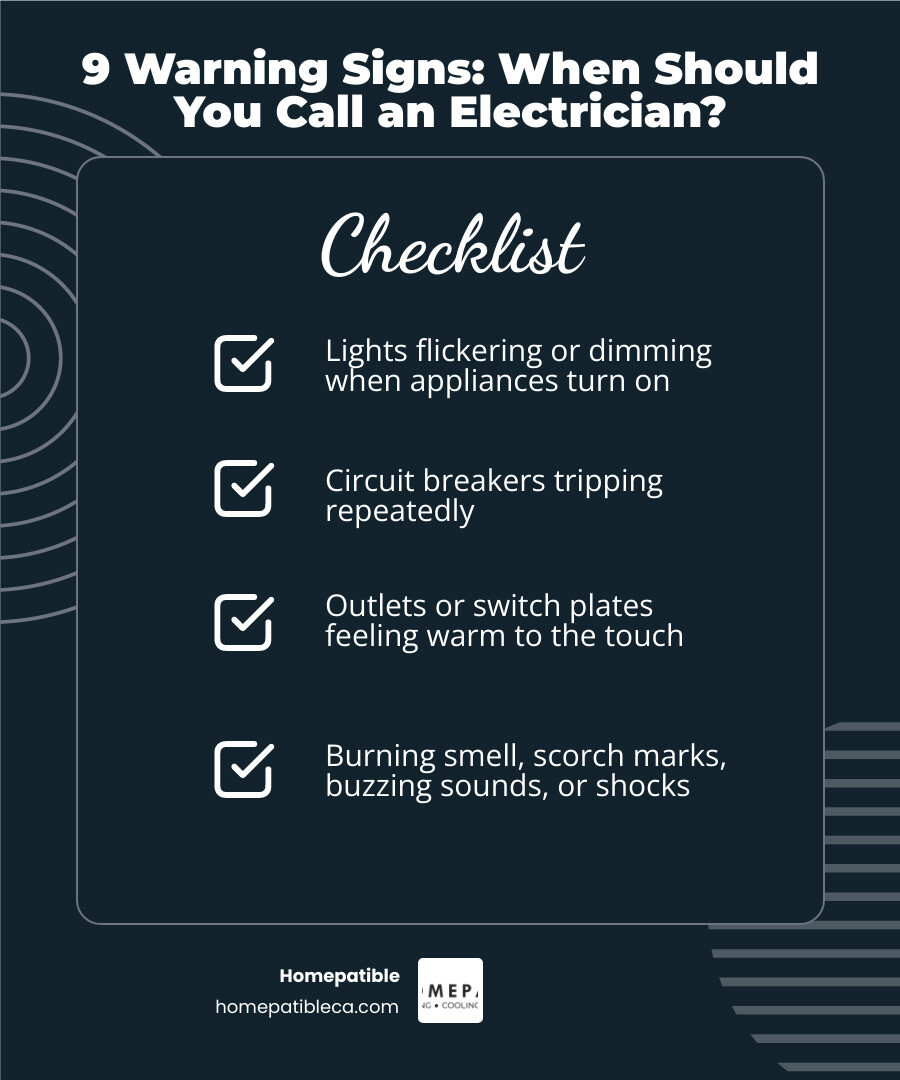
When should you call an electrician? You should call one any time you notice these warning signs:
- Lights flickering or dimming, especially when appliances kick on
- Circuit breakers tripping repeatedly
- Outlets or switch plates that feel warm to the touch
- A burning smell or scorch marks near any outlet or panel
- Buzzing or crackling sounds from walls, switches, or your breaker box
- Electrical shocks or tingling when touching switches or plugging in devices
- A home that is 25 to 30 years old with original wiring that has never been inspected
- Heavy reliance on extension cords as a permanent solution
- Sparks when plugging in appliances or devices
Behind the walls of your Central Coast home is a network of wiring, circuits, and connections that works hard every single day. Most of the time, you never think about it — until something stops working, or something feels off.
Here's the thing: electrical problems rarely announce themselves dramatically. They tend to start small — a light that flickers here, a breaker that trips there — and quietly get worse until they become a serious hazard. According to the Electrical Safety Foundation International, more than 50,000 house fires happen every year due to electrical malfunctions, causing over $1.3 billion in property damage.
That's not meant to scare you. It's meant to help you take the early signs seriously, so a small issue doesn't turn into an emergency.
This guide walks you through the most common warning signs that mean it's time to stop waiting and call a licensed electrician.
Common Warning Signs: When Should You Call an Electrician?
Electricity is the lifeblood of our modern homes here on the Central Coast. From keeping the fridge running in Santa Maria to powering your home office in San Luis Obispo, we rely on it 24/7. But because most of your electrical system is hidden behind drywall, it’s easy to ignore the "noises" it makes until they become screams.
Recognizing the early symptoms of a failing system is the best way to prevent a middle-of-the-night emergency. If you are noticing persistent issues that don't go away after a simple bulb change, it’s time to look into professional Electrical Repair.
One of the most frequent questions we hear is "Is this just a quirk of an old house, or is it dangerous?" Generally, if you’re asking yourself when should you call an electrician, the answer is usually "now." Electrical systems are designed to be silent, cool, and consistent. Anything that deviates from that — like a buzzing sound near a switch or a light that dims every time the microwave runs — is a signal that the system is struggling to meet your home's demands.
By staying proactive and scheduling Electrical Services, you aren't just fixing a nuisance; you are protecting your family from the very real risk of fire and shock.
Understanding when should you call an electrician for flickering lights
We’ve all seen it: you’re sitting in your living room in Goleta, and the overhead light does a quick "blink" when the air conditioner kicks on. While a very brief, occasional flicker might just be a minor voltage dip from the utility company, persistent flickering is a major red flag.
So, when should you call an electrician for flickering lights? You should reach out if:
- The flickering happens in multiple rooms simultaneously.
- The lights dim significantly whenever a large appliance (like a space heater or washing machine) starts up.
- The flickering persists even after you've replaced the light bulb.
Flickering often points to loose connections in your junction boxes or even your main service panel. In coastal areas like Carpinteria or Montecito, salt air can sometimes lead to corrosion at connection points, increasing resistance and causing lights to fluctuate. If the issue is localized to one fixture, it might be a candidate for a new Lighting Installation. However, if it’s widespread, it likely indicates that your home’s central wiring or circuit breaker is being overloaded.
Why frequent circuit breaker trips mean it's time to ask when should you call an electrician
Your circuit breakers are the unsung heroes of your home. They are safety switches designed to "trip" and shut off power when they detect a dangerous surge, a short circuit, or an overload. If a breaker trips once every few months because you ran the toaster and the microwave on the same outlet, that’s the system doing its job.
However, if you find yourself walking to the garage or the side of the house in Orcutt every week to flip a switch back on, you have a problem. Frequent tripping is a sign that the circuit is consistently overburdened or that there is a "ground fault" (where electricity is veering off its intended path).
Continuously resetting a breaker without fixing the underlying cause is dangerous. It puts stress on the wiring and can eventually lead to a fire. This is a primary reason to seek Electrical Panel Services. Whether you need a simple breaker replacement or a full panel upgrade to handle modern electronics, a licensed pro can diagnose the "why" behind the trip rather than just treating the symptom.
Immediate Dangers: Fire Hazards and Shock Risks
While flickering lights are a nuisance, some signs are flat-out emergencies. If you encounter any of the following, don't wait until Monday morning. These are "call us right now" situations.
1. Burning Smells and Scorch Marks If you smell something like burning plastic, ozone, or even a "fishy" odor near an outlet, your wires are likely overheating. This is often caused by arcing, where electricity jumps across a gap in a loose connection, creating intense heat. If you see brown or black scorch marks on an outlet cover, stop using it immediately. This is a critical time to call for Outlet Switch Services.
2. Electrical Shocks and Tingles You should never feel a "zap" when you touch a light switch or plug in a lamp. If you experience a tingling sensation, it’s a clear sign of a grounding issue. This means the electricity is looking for a path to the ground and found one through you. This is especially dangerous in kitchens and bathrooms where water is present.
3. Warm Switch Plates or Outlets Outlets should never be warm to the touch, regardless of how much power you are using. Warmth indicates that the wiring is struggling to handle the load or that the outlet itself is failing. This can even happen with fixtures like ceiling fans. If you notice a switch plate for your fan is hot, it might be time to look at a professional Ceiling Fan Installation to ensure the wiring is sized correctly for the motor's draw.
Evaluating Older Homes and Outdated Wiring Systems
If you live in a beautiful historic home in Mission Canyon or an older bungalow in San Luis Obispo, your electrical system might be a relic of a different era. Most homes built more than 25 to 30 years ago were not designed for the sheer number of gadgets we use today. In April 2026, many of these "vintage" systems are reaching their breaking point.
Outdated Wiring Types to Watch For:
- Knob-and-Tube: Common in homes built before the 1940s, this system lacks a grounding wire and uses porcelain "knobs" to run wires through joists. It was never meant to be covered by modern insulation, which can cause it to overheat.
- Aluminum Wiring: Popular between 1965 and 1975, aluminum expands and contracts more than copper. This leads to loose connections at outlets and switches, which are major fire risks.
- Two-Prong Outlets: If your home is full of outlets that won't accept a three-prong plug, your system isn't properly grounded.
For these older properties, we often recommend a Whole Home Rewiring. While it sounds like a massive undertaking, it is the only way to ensure your home meets 2026 safety standards. If you aren't ready for a full overhaul, targeted Wiring Rewiring in high-use areas like the kitchen or home office can significantly reduce your risk.
The Dangers of DIY and Long-Term Extension Cord Use
In the age of internet tutorials, it's tempting to try and swap out a breaker or add a new outlet yourself. However, electrical work is one of the few home maintenance tasks where a mistake can be fatal or lead to a total loss of your property.
The DIY Trap Many homeowners in Santa Barbara County attempt "quick fixes" that actually violate local building codes. These mistakes often don't show up immediately; they hide behind the walls, slowly degrading until they spark a fire. Furthermore, unpermitted DIY work can cause massive headaches when you try to sell your home or file an insurance claim after a fire.
The Extension Cord "Octopus" Are you using extension cords to power your TV, computer, and lamps permanently? Extension cords are rated for temporary use only. They are not designed to be buried under rugs or stapled to baseboards. Relying on them long-term is a sign that your home lacks enough outlets.
Instead of daisy-chaining cords, consider modern upgrades. If you've recently bought an electric vehicle in Santa Ynez, don't rely on a standard wall outlet and an extension cord; get a dedicated EV Charger Installation. Similarly, if you're worried about Central Coast power outages, a professional Generator Installation is a much safer bet than trying to rig up a portable unit with "suicide cords."
Professional Diagnosis: What to Expect During Your Visit
When you decide it’s time to stop wondering when should you call an electrician and actually make the call, you might be nervous about what happens next. A professional visit from a licensed technician is about more than just "fixing a wire." It’s about a comprehensive safety check.
Here is what you can typically expect during a visit from our team:
- Inspection: We use tools like voltage testers and sometimes thermal imaging cameras to find "hot spots" behind your walls that aren't visible to the naked eye.
- Diagnosis: We don't just tell you a breaker is bad; we find out why it’s failing. Is it an appliance fault, a short circuit, or a loose connection?
- Code Compliance: We ensure all repairs meet the specific National Electrical Code (NEC) requirements and local Central Coast regulations.
- Transparent Explanation: We’ll walk you through the issue and provide clear options for repair or replacement before any work begins.
Our goal is to leave your home in Buellton or Solvang safer than we found it. We treat your home like our own, ensuring every connection is tight and every circuit is balanced.
Frequently Asked Questions about Electrical Safety
Navigating electrical issues can be confusing. To help you decide your next steps, we’ve put together this quick reference guide for Central Coast homeowners.
| Issue | Severity | Action Required |
|---|---|---|
| Single light bulb flickering | Minor | Replace the bulb; if it continues, call a pro. |
| Outlet feels warm or tingly | Serious | Stop using immediately and call an electrician. |
| Breaker trips once a year | Minor | Likely a simple overload; monitor usage. |
| Breaker trips every time you use the toaster | Moderate | Circuit is overloaded; needs a professional check. |
| Burning smell or visible smoke | Emergency | Shut off main power and call 24/7 emergency service. |
| Using 3+ extension cords in one room | Moderate | Need more outlets; schedule an inspection. |
How can you tell the difference between a minor electrical issue and a serious problem?
The easiest way to tell is by looking at the "scope" of the problem. If you have one dead outlet in a bedroom in Lompoc, it might just be a loose wire at that specific receptacle. However, if half the house loses power or your lights dim every time the fridge kicks on, you are dealing with a systemic issue.
"Minor" issues like a single flickering bulb are usually fixed by a new bulb. "Serious" issues are those that involve heat, smells, sounds (buzzing), or repeated tripping. When in doubt, a professional assessment is always the safest route. As we like to say, it’s better to be a year early than one second too late.
Is it safe to rely on extension cords long-term?
In a word: No. Extension cords are not a substitute for permanent wiring. They are prone to overheating, they create trip hazards, and their insulation is not designed for long-term exposure or heavy loads. If you find yourself needing an extension cord for more than a few days, it’s a sign that your home’s electrical layout is outdated. Upgrading your circuits is a much safer and more convenient long-term solution.
Why is it important to call a licensed electrician instead of an unqualified person?
Electricity is unforgiving. A licensed electrician undergoes years of training (often 200+ hours of continuing education annually) to understand circuit loads, grounding, and safety protocols.
When you hire a licensed professional, you get:
- Safety Training: They know how to handle live wires without causing a fire.
- Insurance: If something goes wrong, a licensed company carries the liability, not you.
- Code Compliance: Licensed pros ensure your home stays up to code, which is vital for your home's resale value and insurance coverage.
- Peace of Mind: You can sleep soundly knowing your family is protected by expert workmanship.
Conclusion
Your home’s electrical system shouldn't be a source of stress. By knowing when should you call an electrician, you can catch small issues before they become expensive, dangerous disasters. Whether you’re dealing with the salt-air corrosion of a home in Pismo Beach or the outdated wiring of a historic Montecito estate, help is just a phone call away.
At Homepatible, we take pride in serving our neighbors throughout Santa Barbara and San Luis Obispo Counties. Our team of licensed Nest Pro Elite technicians is available 24/7 for those "re-volt-ing" emergencies, offering transparent pricing and the expertise you need to keep your home running smoothly.
Don't wait for the sparks to fly. If you’ve noticed any of the warning signs mentioned in this guide, reach out to us today. We’re here to make your home smarter, safer, and more efficient.
Ready to secure your home’s electrical system? Visit our Electrical Services page or check out our full range of home solutions at https://homepatibleca.com/services. Let’s get your home back in tip-top shape!
Ready to take the next step?
Our certified technicians are ready to help with all your home service needs. Schedule a service today.
Schedule My ServiceRecent Posts
Related Articles
Ready to Get Started?
Whether you need a repair, maintenance, or a new system, our expert team is here to help.