
The Definitive Guide to Reduce AC Strain During a Heat Wave
Article content and related resources
Learn how to reduce AC strain during a heat wave with proven strategies to keep your Central Coast home cool and efficient.
Why Heat Waves Push Central Coast AC Systems to the Breaking Point
Knowing how to reduce AC strain during a heat wave can be the difference between staying cool and facing a full system breakdown on the hottest day of the year. When temperatures spike across Santa Barbara and San Luis Obispo Counties, your air conditioner doesn't just work harder — it runs nearly nonstop, pushing components like the compressor, condenser coils, and refrigerant lines to their limits. The results can be steep energy bills, premature wear, or a complete system failure right when you need it most.
Here's a quick summary of the most effective ways to reduce AC strain during a heat wave:
- Set your thermostat to 78°F when home and raise it 7–10°F when away
- Replace or check your air filter — a clogged filter is one of the most common causes of AC failure
- Close blinds and curtains on sun-facing windows before 10 a.m. to block solar heat gain
- Pre-cool your home 4–6 hours before peak afternoon heat
- Use ceiling fans to feel up to 4°F cooler without lowering the thermostat
- Shift appliance use — ovens, dryers, and dishwashers — to early morning or evening
- Clear debris from around the outdoor condenser unit and ensure at least 2 feet of clearance
- Schedule a professional tune-up before peak season to catch issues before they become emergencies
The challenge on the Central Coast is real. Even in coastal communities like Santa Barbara and Goleta, summer heat events have grown more intense and more frequent. Your AC system was designed to handle a temperature gap — but when outdoor temperatures climb well above 95°F, that gap becomes a serious strain on every component in the system.
I'm Matthew Palmieri, founder of Homepatible, and with a background spanning HVAC, smart home technology, and contractor operations across the Central Coast, I've seen what separates homes that stay cool during a heat wave from those that face emergency calls and system failures. In this guide, I'll walk you through exactly how to reduce AC strain during a heat wave so your system — and your family — stays comfortable all season long.
Understanding Why Your System Struggles in Extreme Temperatures
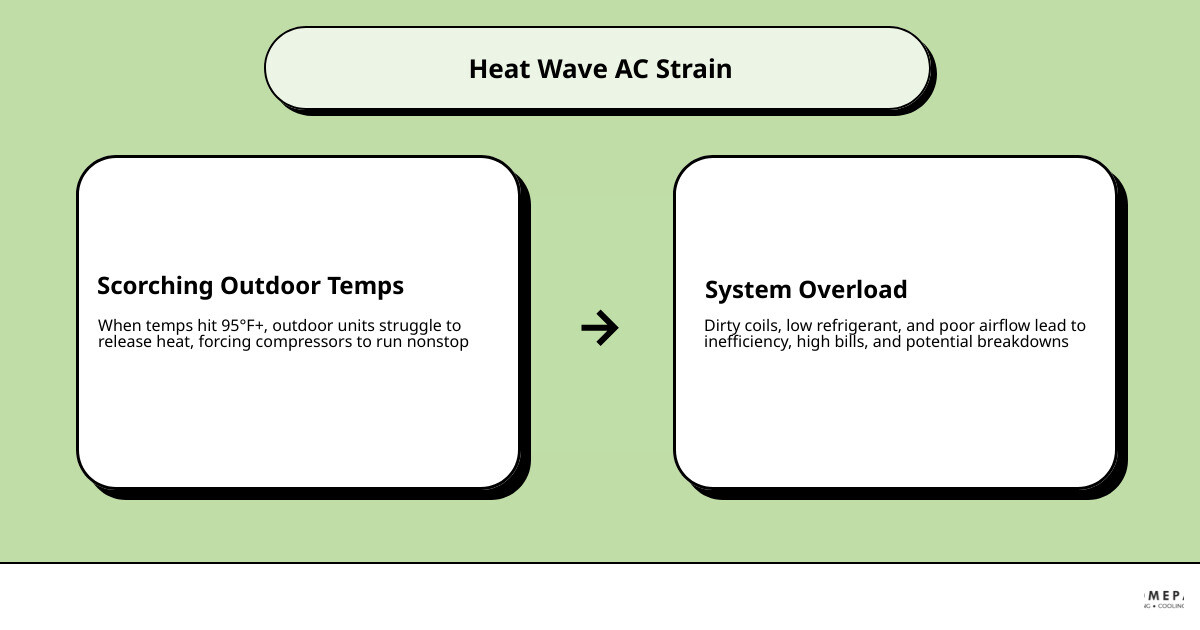
To understand how to reduce AC strain during a heat wave, we first need to look at what happens under the hood of your outdoor unit. Most air conditioning systems are designed to maintain a 20-degree difference between the outdoor air and your indoor setting. When the Central Coast sizzles at 95°F or higher, your AC must work exponentially harder to bridge that gap.
The outdoor unit is responsible for releasing the heat collected from inside your home. When the ambient air is already scorching, the heat exchange process slows down. This forces the compressor to run at full capacity for hours on end. If your refrigerant levels are slightly low or your coils are dusty, the system can't shed heat efficiently, leading to overheating. This constant operation is what accelerates mechanical failure. Learning How to Keep Your Cool When the Central Coast Sizzles starts with recognizing that your AC isn't a "cold air maker"—it's a heat mover, and moving heat is much harder when it's 100°F in Santa Maria.
Smart Thermostat Strategies: How to Reduce AC Strain During a Heat Wave
One of the most common mistakes we see in places like Paso Robles and Atascadero is "cranking" the thermostat down to 65°F in hopes of cooling the house faster. In reality, your AC runs at one speed. Setting it lower doesn't make it work faster; it just makes it work longer.
The U.S. Department of Energy recommends a setting of 78°F when you are home. While that might sound warm, combining it with a ceiling fan can make the room feel like 74°F. For every degree you raise the thermostat, you reduce cooling energy use by roughly 3%.
| Thermostat Setting | Estimated Energy Savings | Strain Level on AC |
|---|---|---|
| 72°F | 0% (Baseline) | High |
| 75°F | 9% Savings | Moderate |
| 78°F | 18% Savings | Low/Sustainable |
| 82°F (Away) | 30%+ Savings | Minimal |
Smart thermostats, such as those installed by our Nest Pro Elite technicians, are game-changers for heat wave management. You can "pre-cool" your home 4–6 hours before the peak afternoon heat (typically between 2 p.m. and 6 p.m.). By lowering the temperature in the morning when the grid is less stressed and the air is cooler, you leverage your home’s "thermal mass"—the ability of your walls and furniture to hold onto the cold—reducing the need for the AC to fight the peak sun. If you're looking for more technical details, check out A Complete Guide to AC System Servicing for Paso Robles Homeowners.
Essential Maintenance to Prevent System Breakdowns

Maintenance isn't just about efficiency; it's about survival for your HVAC system. During May 2026, as we prepare for the summer peak, airflow is your best friend. A dirty air filter acts like a chokehold on your system. When airflow is restricted, the evaporator coil can actually freeze over—even when it's 100°F outside—because the cold refrigerant isn't absorbing enough heat from the air.
Beyond filters, the outdoor condenser coils need to be clean. Dirt, salt air from the coast, and debris from nearby plants can insulate the coils, trapping heat inside. We recommend maintaining at least two feet of clearance around your outdoor unit to ensure it can "breathe."
Another silent killer of efficiency is leaky ductwork. In a typical Central Coast home, 20–30% of conditioned air is lost through duct leaks and poor connections before it ever reaches your living room. Sealing these leaks ensures that every ounce of cold air you pay for actually cools your home. For residents in the north county, scheduling an AC Maintenance Tune-Up in San Luis Obispo is the most reliable way to ensure your system is sealed and ready for the heat.
Reducing the Indoor Heat Load to Ease Your AC’s Workload
If you want to know how to reduce AC strain during a heat wave, you have to look at your home as a thermal envelope. The less heat that gets in, the less work your AC has to do. Sunlight streaming through windows is a major heat source; proper window coverings can reduce solar heat gain by as much as 60%. Closing your blinds before 10 a.m. is a simple, free way to save your AC.
Attic insulation is another critical factor. Proper insulation can prevent up to 40% of heat from entering through your ceiling. If your attic is baking at 140°F, that heat is constantly radiating into your living space.
Don't forget about internal heat sources:
- Lighting: Switch to LED bulbs, which produce significantly less heat than old incandescent ones.
- Appliances: Your oven, dishwasher, and dryer are giant heaters. Shift these chores to the early morning or late evening.
- Electronics: Even computers and large TVs can add to the indoor temperature. Turn them off when not in use.
Implementing these steps is often part of the Benefits of an AC Service Agreement for Savvy Homeowners, where we help you identify these "heat leaks" during our regular visits.
Recognizing Warning Signs and Knowing When to Call a Pro
Sometimes, despite your best efforts, the heat is simply too much for an aging or unmaintained system. You need to know when your AC is waving the white flag so you can call for help before a minor repair turns into a total replacement.
Watch for these red flags:
- Weak Airflow: If the air coming from the vents feels like a whisper, your blower motor or filter may be struggling.
- Unusual Noises: Squealing, grinding, or banging sounds often indicate a failing belt or motor bearing.
- Short Cycling: If the unit turns on and off every few minutes, it’s likely overheating or has a sensor issue.
- Warm Air: If the air coming out isn't cold, you could have a refrigerant leak or a compressor failure.
- Ice on the Lines: If you see frost on the copper pipes leading to your outdoor unit, turn the system off immediately and call us. Running a frozen system can destroy the compressor.
If your system is more than 10–12 years old and struggles every summer, it might be time to consider the long-term savings of a new, ENERGY STAR-certified unit. A modern system can cut annual cooling costs by up to $500. For those in the North County area, we specialize in AC Installation Replacement in Paso Robles to get you back to comfort quickly.
Frequently Asked Questions about AC Performance
Does lowering the thermostat to 60°F help how to reduce ac strain during a heat wave?
No, it actually does the opposite. As mentioned earlier, your AC runs at a constant speed. Setting it to 60°F won't make the house cool down any faster than setting it to 72°F. It only ensures the system runs much longer than it was designed to, which increases the risk of the compressor overheating or the coils freezing. To how to reduce ac strain during a heat wave, stick to a consistent, moderate temperature.
Can ceiling fans help how to reduce ac strain during a heat wave?
Absolutely! A ceiling fan creates a "wind chill effect" on your skin, making a room feel up to 4°F cooler than the actual air temperature. This allows you to raise your thermostat setting without losing comfort. Just remember: fans cool people, not rooms. Turn them off when you leave the room to save on your electrical bill. Also, ensure they are rotating counterclockwise in the summer to push a cool breeze downward.
Is it better to turn the AC off when I leave the house?
Generally, no—especially during a heat wave. If you turn the AC off completely, your home’s walls, furniture, and floors will soak up the heat. When you return, your AC has to work for hours at maximum capacity just to remove that "stored" heat. It is much more efficient to use a "setback" strategy: raise the temperature by 7–10°F while you're away. This keeps humidity under control and prevents the house from becoming a literal oven, making it much easier for the system to recover when you get home.
Conclusion
Surviving a Central Coast summer requires a proactive approach. By understanding how to reduce AC strain during a heat wave—through smart thermostat use, diligent maintenance, and reducing your home's heat load—you can protect your investment and keep your family safe.
At Homepatible, we are proud to serve Santa Barbara County and San Luis Obispo County with expert HVAC, plumbing, and electrical services. Whether you are in Buellton, Santa Maria, or Montecito, our licensed technicians are ready to help. We offer 24/7 emergency response because we know that AC failures don't always happen during business hours.
Don't wait for the next record-breaking heat wave to find out if your system can handle the pressure. Schedule your professional cooling service today and let us ensure your home remains a sanctuary of cool comfort all summer long.
Ready to take the next step?
Our certified technicians are ready to help with all your home service needs. Schedule a service today.
Schedule My ServiceRecent Posts
Related Articles
Ready to Get Started?
Whether you need a repair, maintenance, or a new system, our expert team is here to help.