
Teaching an Old House New Cool Tricks: HVAC Options Compared
Article content and related resources
Discover central air vs mini split for older homes: efficiency, zoning & retrofits for Central Coast historic properties. Find your cool solution!
The Real HVAC Dilemma for Older Homes on the Central Coast
Central air vs mini split for older homes is one of the most common questions homeowners face when trying to modernize a house that was never built with modern cooling in mind. And the honest answer? It depends — but the stakes are higher than most people realize.
Here's a quick breakdown to help you decide:
| Factor | Central Air | Mini Split |
|---|---|---|
| Existing ductwork required | Yes | No |
| Works in homes without ducts | Only with costly retrofit | Yes, easily |
| Energy efficiency | Moderate (duct losses up to 30%) | High (no duct losses) |
| Zoned comfort control | Limited (add-ons cost more) | Built-in, room by room |
| Best for older homes | Only if good ducts exist | Usually the better fit |
| Heating capability | Cooling only (needs furnace) | Both heating and cooling |
| Installation disruption | High (if no ducts) | Low |
Many older homes across Santa Barbara and San Luis Obispo Counties were built long before central air was a standard feature. Craftsman bungalows, Victorian-era properties, and mid-century homes throughout the Central Coast were designed for natural ventilation — not forced-air systems. That means no ductwork, no dedicated mechanical chases, and often no easy path to add them without tearing into plaster walls or compromising historic character.
The result: homeowners are often stuck choosing between an invasive, expensive ductwork retrofit and a more modern ductless solution that may feel unfamiliar. Neither choice is wrong — but one is almost always a better fit depending on your specific home.
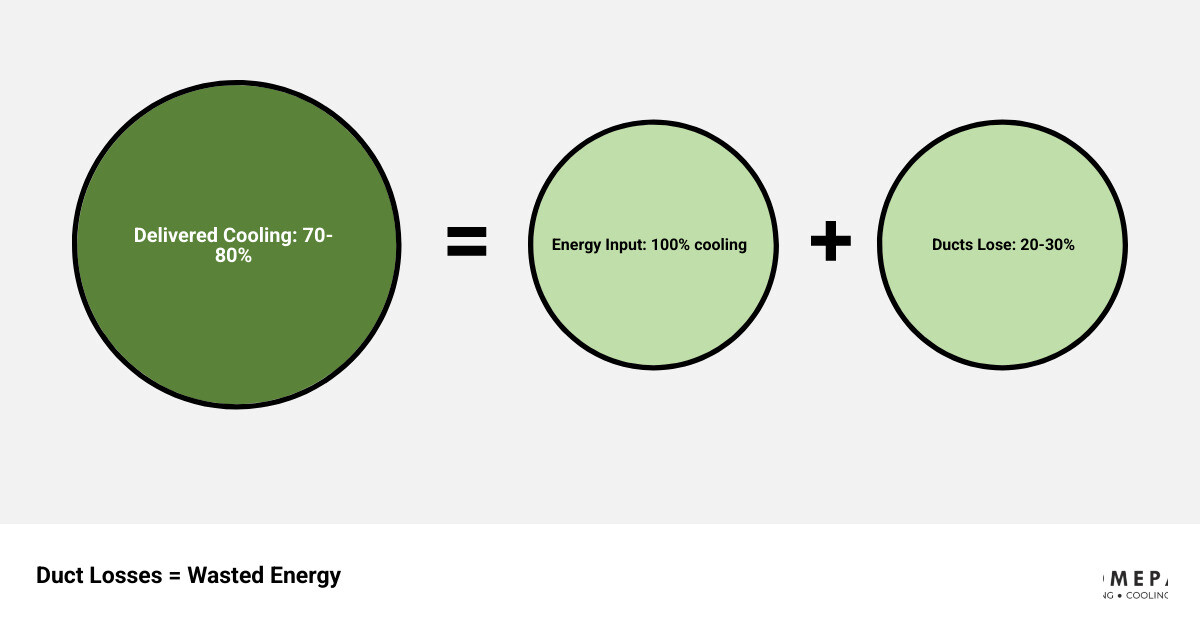
According to the U.S. EPA and Energy Star, homes can lose 20 to 30 percent of their cooling capability through duct systems alone. For an older home where ducts would need to run through unconditioned attic spaces or cramped crawlways, that number can climb even higher — making efficiency a serious concern before you even flip the switch.
This guide breaks down everything you need to know: installation realities, efficiency numbers, aesthetics, maintenance, and how to think about the right system for your older Central Coast home.
The Challenges of Retrofitting Central Air in Historic Properties
When we step into a beautifully preserved Victorian in Santa Barbara or a mid-century gem in San Luis Obispo, the first thing we look for isn't the thermostat—it's the infrastructure. Most homes built before the 1960s simply weren't designed to house the massive "lungs" required for a central air system.
The primary hurdle is the absence of ductwork. In many historic properties, the heating system consists of a boiler and radiators or floor furnaces. To install central AC, we have to find a way to snake large, insulated tubes throughout the house. This often means sacrificing precious closet space, building "soffits" (bulkheads) that drop the ceiling height, or—worst of all—tearing into original lath-and-plaster walls.
Structural integrity is another major concern. Cutting through hand-hewn floor joists or original support beams to fit a return air vent can compromise the very bones of the house. For homeowners committed to architectural preservation, the invasive nature of a central air retrofit is often a dealbreaker.
Furthermore, even if you manage to squeeze the ducts in, you face significant airflow limitations. Small, cramped attics often lead to "pinched" ducts that kill efficiency. If you're considering this route, understand What Every Callender Resident Should Know About Central Air Installation before committing to a project that could permanently alter your home's historic charm.
Why Ductless Systems are a Game Changer for the Central Coast
If central air is the "whole-body" approach, a ductless mini-split is the "targeted" solution. For our climate in Ballard, Lompoc, and Goleta, this is often the most practical answer to the central air vs mini split for older homes debate.
Mini-splits consist of an outdoor condenser unit connected to one or more indoor air handlers via small refrigerant lines. These lines only require a three-inch hole in the exterior wall—no massive demolition required.
The real magic, however, lies in zoned cooling. In an older home, you might have a drafty parlor that stays cold and an upstairs bedroom that feels like a sauna. A mini-split allows you to set different temperatures for every room. If you aren't using the guest wing, you can simply turn those units off, saving a significant amount on your monthly utility bills.
Ductless systems also excel at moisture control—a big plus for homes near the coast in Carpinteria or Summerland. By removing humidity more effectively than many older central units, they help prevent that "musty" smell often associated with historic properties. For those ready to beat the heat, checking out an AC Installation in Ballard CA: Your Ticket to a Breeze Easy Summer can provide a roadmap to year-round comfort.
Solving Insulation Issues with a Mini Split for Older Homes
Older homes are notorious for poor "thermal envelopes." This is a fancy way of saying they leak air like a sieve. Whether it’s original single-pane windows or walls with zero insulation, these houses struggle with heat gain.
A mini split for older homes solves this by providing independent room control. Rather than trying to force a single central unit to fight the heat throughout the entire drafty structure, mini-splits work room-by-room. This is especially helpful for rarely used rooms or new additions like converted garages or guest houses, where extending a central duct system would be nearly impossible.
Performance and Efficiency of a Mini Split for Older Homes in 2026
As of April 2026, the technology behind these systems has reached incredible heights. Modern mini-splits utilize inverter technology, allowing variable-speed compressors to ramp up and down smoothly rather than constantly cycling on and off. This results in:
- Superior SEER2 Ratings: While standard central units often hover between 14 and 18 SEER2, high-end mini-splits can reach ratings as high as 30 to 42.
- HSPF2 Standards: These systems aren't just for cooling; they are highly efficient heat pumps that provide warmth in the winter without the need for a separate furnace.
- Incentives and Rebates: In 2026, federal tax credits and Inflation Reduction Act incentives can significantly offset the initial investment for high-efficiency heat pump systems.
- Sustainability: By eliminating the 20-30% energy loss associated with leaky ducts, you’re drastically reducing your home’s carbon footprint.
Comparing Aesthetics and Performance: Central Air vs Mini Split for Older Homes
We often hear the same concern: "I don't want a big white box on my wall." It’s a fair point. In a historic Montecito estate, aesthetics matter.
Central air offers the "invisible" look. All you see are small, discreet vents in the floor or ceiling. However, mini-split technology has evolved. Beyond the standard wall-mounted unit, we now offer ceiling cassettes that sit flush with the ceiling, floor-mounted units that look like modern radiators, and "slim-duct" systems that hide behind the scenes while still offering ductless efficiency.
To help visualize the trade-offs, consider this comparison:
| Feature | Central Air | Mini Split |
|---|---|---|
| Visual Impact | Low (hidden vents) | Moderate (visible wall/floor units) |
| Air Filtration | High (whole-home MERV filters) | Localized (washable filters) |
| Noise Level | Moderate (duct vibrations/whooshing) | Very Low (whisper-quiet) |
| Zoning | Difficult/Expensive | Built-in / Native |
| Humidity Control | Good | Excellent |
For many, the "Ugly Mini-Split" problem is solved with professional line hides—decorative covers that protect the exterior refrigerant lines and blend into the home's siding. When planning your upgrade, following a Don't Sweat It: Your Lompoc AC Installation Roadmap can help you navigate these aesthetic choices.
Maintenance Differences for Central Air vs Mini Split for Older Homes
Maintenance is where the two systems truly diverge.
- Central Air: Requires regular duct cleaning (every 3-5 years) to prevent dust and allergen buildup. You also need to change a single central filter every 1-3 months.
- Mini-Split: These units have washable filters inside each indoor head. Because they recirculate air within the room, these filters should be rinsed every 2-4 weeks to maintain peak efficiency.
Both systems require an annual professional tune-up to check refrigerant levels and drainage. In older homes, ensuring proper drainage is critical to prevent water damage to historic wood or plaster.
Hybrid HVAC Strategies and Proper System Sizing
Sometimes, the best answer to central air vs mini split for older homes is "both."
We often recommend a hybrid approach. If your home has existing ductwork on the first floor that is in good condition, we can install a high-efficiency central AC unit for the main living areas. Then, for that hard-to-reach attic bedroom or the new garage conversion in Orcutt, we add a single-zone mini-split.
Before any installation, we perform a Manual J load calculation. This is a precise scientific assessment of your home’s cooling needs, accounting for window size, insulation levels, and local climate. Getting the size right is vital; an oversized unit will "short cycle," leading to high humidity and premature system failure.
Modern systems also integrate seamlessly with Google Nest smart thermostats. As Licensed Nest Pro Elite technicians, we can set up your home so that your central system and your mini-splits talk to each other, optimizing your energy use automatically.
Frequently Asked Questions about Cooling Older Homes
Is it feasible to add ductwork to a home built before 1950?
While technically possible, it is often cost-prohibitive. Structural barriers like balloon framing or solid masonry walls make it a nightmare. Furthermore, because you lose 20-30% of your energy through those new ducts, you're paying for cooling that never actually reaches your rooms. In most pre-1950 homes, a ductless or slim-duct solution is the smarter investment.
Can mini-splits handle both heating and cooling in the Central Coast climate?
Absolutely. Modern heat pump technology is designed for year-round comfort. Even on the rare chilly night in Santa Maria or Buellton, a mini-split can provide efficient heating. In fact, heat pumps are often three times more efficient than traditional electric baseboard heaters or old floor furnaces.
Which system offers better air filtration for older, dustier houses?
Central air systems generally win on filtration because they can accommodate thick, high-MERV or HEPA filters that scrub the air for the entire house. However, many modern mini-splits now come with specialized ionizers and multi-stage filters that are excellent at localized dust and allergen mitigation.
Conclusion
Teaching an old house "new cool tricks" doesn't have to be a headache. Whether you choose the whole-home coverage of central air or the high-efficiency flexibility of a mini split for older homes, the goal is the same: a comfortable, efficient sanctuary that respects the history of your property.
At Homepatible, we specialize in bringing modern comfort to the Central Coast's most unique homes. From Santa Barbara to San Luis Obispo, our licensed Nest Pro Elite technicians are ready to help you find the perfect fit for your lifestyle and your architecture. With 24/7 emergency service and transparent pricing, we’re here to ensure you never have to sweat through another California summer.
Ready to find the perfect cooling solution for your historic home? Request expert HVAC services from the Homepatible team today!
Ready to take the next step?
Our certified technicians are ready to help with all your home service needs. Schedule a service today.
Schedule My ServiceRecent Posts
Related Articles
Ready to Get Started?
Whether you need a repair, maintenance, or a new system, our expert team is here to help.