
Step-by-Step Guide to Spring Plumbing Inspection
Article content and related resources
Spring plumbing inspection what to check: use this checklist to spot leaks, test drains, and prepare your Central Coast home before spring rains hit.
Why a Spring Plumbing Inspection Is One of the Smartest Things You Can Do for Your Home
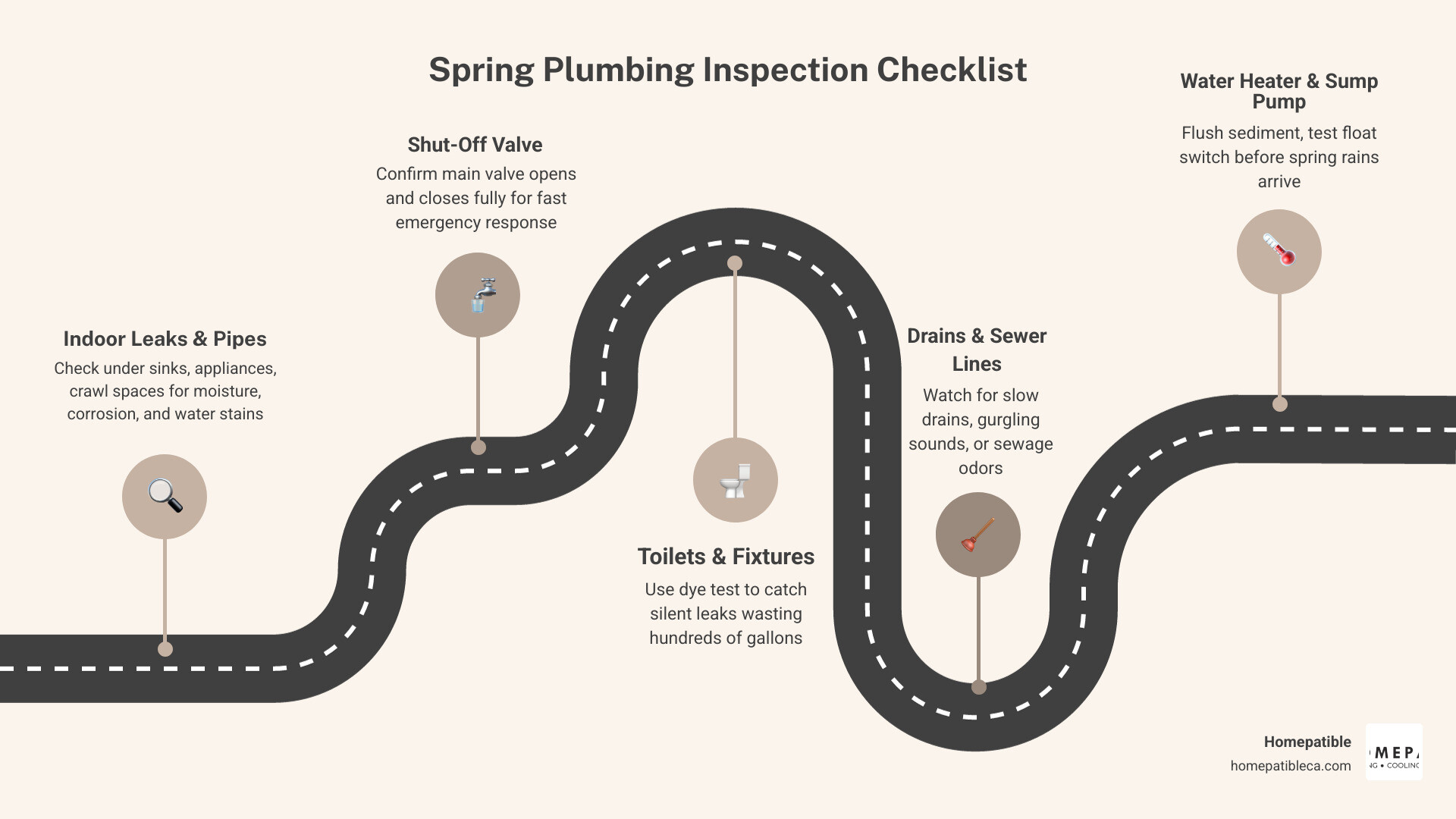
Knowing spring plumbing inspection what to check can save you from a costly surprise — here is a quick overview of the most important areas to cover:
- Indoor leaks and pipes — Look under sinks, around appliances, and in crawl spaces for moisture, corrosion, or water stains
- Main shut-off valve — Confirm it opens and closes fully so you can act fast in an emergency
- Toilets and fixtures — Use the food coloring dye test to catch silent leaks wasting hundreds of gallons
- Drains and sewer lines — Watch for slow drains, gurgling sounds, or sewage odors that signal a developing clog
- Water pressure — Test with a gauge and aim for 40–60 PSI; anything above 80 PSI can damage pipes
- Outdoor faucets and irrigation — Check hose bibs for freeze damage and restart irrigation zone by zone
- Water heater — Listen for rumbling sounds, check for corrosion, and flush out sediment annually
- Sump pump — Pour water into the pit to confirm the float switch triggers before spring rains arrive
Winter on the Central Coast of California is milder than most of the country — but that does not mean your plumbing gets a free pass. Seasonal storms, temperature swings, and months of heavier indoor water use all add up. By the time spring arrives in Santa Barbara County and San Luis Obispo County, small issues like hairline pipe cracks, worn hose bibs, or sediment-clogged water heaters are already hiding in your walls, under your sinks, and out in your yard. The problem is, most homeowners do not notice until a minor issue becomes a water damage claim. According to industry data, the average home water damage claim runs around $11,000 — and many of those incidents trace back to plumbing problems that a simple seasonal inspection would have caught early. Homeowners who do annual plumbing maintenance can reduce their risk of a major plumbing emergency by as much as 70%.
This guide walks you through every area of your home's plumbing system worth checking this spring, from indoor pipes and toilets to outdoor faucets, water heaters, and sump pumps — with clear steps you can act on today.
I'm Matthew Palmieri, founder of Homepatible, and with a background spanning plumbing, HVAC, and home systems operations across the Central Coast, I've seen how a proper spring plumbing inspection — knowing what to check and when — separates homeowners who stay ahead of problems from those dealing with 2 AM emergencies. Let's make sure you're in the first group.
Handy spring plumbing inspection what to check terms:
- spring ac and plumbing maintenance for california
- spring home systems maintenance guide
Spring Plumbing Inspection What to Check First: Leaks, Pipes, and Shut-Off Valves
When starting your spring checklist, the first step is always to look for signs of hidden leaks, pipe stress, and structural water damage. During the winter, even mild coastal freezes can put stress on your residential pipe network. As ground temperatures shift in the spring, those tiny, stressed areas can open up into active leaks.
Identifying these issues early prevents mold growth, structural wood rot, and expensive repairs. If you suspect an issue that you cannot visually confirm, scheduling a professional Plumbing Leak Detection in Carpinteria is the fastest way to pin down the source before it damages your home. For general checkups, keeping up with Plumbing General Plumbing in Santa Barbara ensures your entire system remains in peak condition.

Spring Plumbing Inspection What to Check Under Sinks, Appliances, and Exposed Pipes
Grab a flashlight and do a systematic walkthrough of your home. Start by opening every sink cabinet in your kitchen, bathrooms, and laundry room. Look closely at the P-traps and the small shut-off valves feeding your faucets.
Keep an eye out for these visual red flags:
- Green corrosion (verdigris) on copper pipes or brass fittings.
- White mineral deposits around joints, indicating a slow, evaporating leak.
- Dampness, water stains, or warped wood on the floor of your cabinets.
- Rust on metal connectors or supply lines.
Do not forget your appliances. Check the water supply lines behind your refrigerator, dishwasher, and washing machine. Rubber washing machine hoses are highly prone to drying out, cracking, and causing catastrophic floods; they should be inspected for bulging or brittleness and replaced every five years. Upgrading to braided stainless steel hoses is a simple, highly effective way to prevent sudden bursts.
Spring Plumbing Inspection What to Check With the Water Meter Test
Not all plumbing leaks are visible. To check for hidden leaks inside your walls, under your floors, or beneath your concrete slab, you can perform a simple water meter test:
- Turn off every water-using fixture and appliance inside and outside your home (no washing machines, dishwashers, or irrigation running).
- Locate your water meter box (usually near the street curb or front boundary of your property).
- Open the cover and look at the dial. Many meters have a small, triangular "leak indicator" wheel that spins even with minor water flow.
- Note the exact reading on the meter.
- Do not use any water for at least two hours.
- Check the meter again. If the reading has changed, you have a hidden leak somewhere in your plumbing system.
If you notice unexplained warm spots on your flooring, hear the sound of running water when everything is turned off, or see a sudden spike in your utility bills, these are classic signs of a slab leak or a hidden wall leak that requires immediate professional leak detection.
Check the Main Water Shut-Off Valve Before You Need It
Your main water shut-off valve is your home's emergency brake. If a pipe bursts in the middle of the night, knowing where this valve is and ensuring it actually works can mean the difference between a minor cleanup and a completely ruined home.
Locate your main shut-off valve—usually found where the main water line enters the home, often in a garage, basement, or near your outdoor water meter. Gently test the valve to make sure it turns smoothly. Older gate valves (which have a round wheel handle) are notorious for getting stuck or failing to seal completely over time. If your valve is difficult to turn or shows signs of heavy rust, we highly recommend having a professional replace it with a highly reliable, quarter-turn brass ball valve.
Step 2: Check Toilets, Drains, Sewer Lines, and Water Pressure
Once your supply lines and shut-off valves are verified, it is time to focus on your home's fixtures, drains, and overall water pressure. These areas directly affect your daily water efficiency and comfort.
Spring Plumbing Inspection What to Check in Toilets and Fixtures
Toilets are the single largest source of water waste in the average American home. A silent toilet leak can waste up to 200 gallons of water per day—often without making a sound.
To catch a silent leak, perform the food coloring dye test:
- Remove the lid of your toilet tank.
- Add a few drops of blue, red, or green food coloring into the tank water until the color is deep.
- Do not flush the toilet.
- Wait 30 minutes.
- Check the toilet bowl. If any colored water has seeped from the tank into the bowl, your flapper valve is worn out or the flush valve is leaking.
Replacing a worn-out flapper is an easy DIY fix, but if you notice water pooling around the base of the toilet, a soft bathroom floor, or persistent sewer odors, your wax ring may have failed. For secure repairs or water-saving upgrades, consider professional Plumbing Toilet Repair Installation in Arroyo Grande. Additionally, take a moment to clean your faucet aerators and showerheads by soaking them in white vinegar to dissolve mineral scale, restoring clean, even flow.
Test Every Drain for Slow Flow and Sewer Warning Signs
Run water down every sink, shower, and tub in your home to observe how quickly it drains. Slow drainage, gurgling sounds from your pipes, or bubbling water in your toilets when you run a nearby sink are all warning signs of a developing clog.
Over the winter, grease, soap scum, hair, and organic debris build up in your drain lines. Furthermore, as the ground warms up in the spring, tree roots grow aggressively toward the moisture in your underground sewer pipes. If you notice multiple slow drains throughout your house simultaneously, this points to a main sewer line issue rather than a simple sink clog.
To clear stubborn blockages safely without damaging your pipes with harsh chemical cleaners, professional Plumbing Drain Cleaning in Pismo Beach is the safest route. If tree roots or shifting soil have compromised your main sewer line, a camera inspection and expert Plumbing Sewer Line Repair Replacement in See Canyon will resolve the issue permanently.
Measure Water Pressure and Look for Flow Problems
Water pressure that is too high can feel great in the shower, but it acts like a silent killer for your plumbing system. High water pressure strains pipe joints, wears out faucet cartridges, and can easily cause water heaters or washing machine hoses to burst.
To test your home's water pressure:
- Purchase an inexpensive water pressure gauge from a local hardware store.
- Screw the gauge onto an outdoor hose bib or spigot.
- Ensure all indoor faucets and water-using appliances are turned off.
- Turn the outdoor faucet on fully and note the reading.
The ideal water pressure for a residential home is between 40 and 60 PSI. If your pressure reads above 80 PSI, your home's Pressure Reducing Valve (PRV) may have failed or might need adjustment. A failing PRV allows dangerous pressure spikes into your home, which can cause banging pipes (water hammer) and premature appliance failure.
Step 3: Inspect Outdoor Plumbing, Irrigation, and Regional Spring Risks
Spring on the Central Coast brings beautiful weather, but the transition from winter rains to warmer, dry days means your outdoor plumbing needs some immediate attention.
Test Outdoor Faucets, Hose Bibs, and Spigots Safely
Outdoor spigots are highly vulnerable to winter freeze damage. Even a brief frost can freeze water trapped inside an outdoor faucet, causing the internal pipe to split behind your siding or inside your crawl space. The tricky part is that you won't see the leak until you turn the faucet on in the spring.
To safely test your hose bibs, perform the "Thumb Test":
- Remove any garden hoses or splitters attached to the spigot.
- Place your thumb firmly over the opening of the faucet.
- Slowly turn the water valve on.
- If you can easily stop the water flow with your thumb, there is a very high probability that the pipe has split internally, and water is leaking inside your walls or crawl space rather than coming out of the spout.
If you suspect a split pipe, turn off the water immediately and inspect the wall inside your home or crawl space directly behind the outdoor faucet for moisture or dripping water.
Restart Irrigation Systems Without Causing Leaks
Before you start watering your lawn or garden for the dry season, perform a controlled, zone-by-zone startup of your irrigation system:
- Inspect Valve Boxes: Open your inground valve boxes and check for standing water, muddy soil, or active leaks around the solenoid valves.
- Run Each Zone Individually: Walk your yard while each zone is active. Look for broken or clogged sprinkler heads, misdirected spray hitting your home’s siding, and bubbling water that indicates a cracked underground lateral line.
- Verify Backflow Prevention: Your backflow prevention device prevents contaminated irrigation water from siphoning back into your clean household drinking water. Annual testing is critical for your family's health. Schedule professional Plumbing Backflow Testing Prevention in Arroyo Grande to ensure your system meets safety standards.
Account for Washington and Central Coast Spring Conditions
While homeowners in regions like Washington state deal with heavy, relentless spring rains and saturated soils that put massive stress on storm drains, Central Coast homeowners face a unique set of seasonal factors. Our microclimates range from damp coastal areas in Carpinteria and Montecito to warmer, drier inland valleys like Solvang and Santa Ynez.
During wet winters, our clay-heavy soils expand, putting pressure on buried sewer lines and water supply pipes. As the ground dries out and shifts in the spring, older galvanized piping or clay sewer lines can crack or shift, leading to sudden leaks or root intrusion. Additionally, coastal homes in areas like Goleta and Carpinteria face accelerated corrosion on outdoor fixtures due to salty ocean air, making annual inspections of hose bibs and outdoor shut-off valves even more critical.
Step 4: Maintain Water Heaters and Sump Pumps Before Spring Demand
Your water heater and sump pump are two of the hardest-working appliances in your home. Giving them a quick tune-up in the spring ensures they operate efficiently and protect your home from unexpected flooding.
Look for Signs Your Water Heater Needs Flushing or Maintenance
Over the course of a year, dissolved minerals in your water settle to the bottom of your water heater tank. This sediment forms an insulating layer between the burner or heating element and the water, forcing your water heater to work much harder to heat your water. This sediment buildup can reduce your water heater's energy efficiency by up to 30% and significantly shorten its overall lifespan.
Watch out for these common warning signs:
- Popping, rumbling, or knocking noises coming from the tank (this is the sound of steam bubbles escaping through the hard sediment layer).
- Cloudy or rust-colored hot water.
- Fluctuating hot water temperatures or taking longer to recover.
- Visible rust or moisture around the base of the tank or at pipe connections.
Flushing your water heater tank annually clears out this sediment and extends the unit's lifespan. To ensure your system is operating safely and efficiently, consider scheduling Plumbing Water Heater Services in Orcutt for a professional flush, anode rod check, and temperature calibration (setting your thermostat to 120°F balances safety, comfort, and energy savings).
Safely Test a Sump Pump Before Spring Rains
If your home has a basement or a low-lying crawl space, your sump pump is your primary defense against groundwater flooding. Sump pumps often sit idle for months, during which dust, debris, or a stuck float switch can easily cause them to fail when you need them most.
To test your sump pump:
- Remove the lid of your sump pit and check for any debris, dirt, or rocks that could block the pump's intake.
- Slowly pour a five-gallon bucket of water directly into the pit.
- Watch the float switch. As the water level rises, the float should lift smoothly and automatically trigger the pump.
- Listen to the pump. It should run smoothly without any excessive vibration or grinding noises, quickly discharging the water from the pit.
- Go outside and verify that the discharge line is clear of debris and carries the water at least 5 to 6 feet away from your home's foundation.
If your pump fails to activate, makes strange noises, or if you want to install a battery backup system to keep your basement dry during a storm-induced power outage, contact our team for expert Plumbing Sump Pump Services in Carpinteria.
| Maintenance Task | Homeowner DIY Friendly? | Requires Professional Plumber? | Recommended Frequency |
|---|---|---|---|
| Toilet Dye Test | Yes | No | Twice a Year |
| Visual Pipe Inspection | Yes | No | Every Spring |
| Water Pressure Test | Yes | No | Once a Year |
| Sump Pump Bucket Test | Yes | No | Every Spring / Fall |
| Water Heater Flush | Yes (with caution) | Recommended | Once a Year |
| Sewer Line Camera Check | No | Yes | Every 2-3 Years |
| Backflow Prevention Test | No | Yes | Once a Year (Required) |
Improve Water Efficiency During Spring Plumbing Maintenance
Spring is the perfect time to make small upgrades that lower your utility bills and conserve water. By addressing the issues found during your spring plumbing inspection, you can significantly reduce your household's environmental footprint.
Consider these high-efficiency upgrades during your spring maintenance:
- Install High-Efficiency Aerators: Upgrading your faucet aerators to models that use 1.5 GPM (gallons per minute) or less can save thousands of gallons of water annually without sacrificing water pressure.
- Upgrade to Low-Flow Showerheads: Modern, high-efficiency showerheads use 2.0 GPM or less, reducing both water use and the energy required to heat your water.
- Install Smart Leak Detectors: These smart home devices monitor your main water line for unusual flow patterns and can automatically shut off your main water supply if a leak is detected, protecting your home from catastrophic water damage.
- Adjust Irrigation Controllers: Program your sprinklers to water only in the early morning or late evening hours to minimize evaporation.
Frequently Asked Questions and Next Steps for a Spring-Ready Plumbing System
How can homeowners check for hidden leaks or pipe damage after winter?
The most reliable way to check for hidden plumbing leaks is by performing a water meter test. Ensure all water-using fixtures, appliances, and irrigation systems are completely turned off, then check your water meter dial. If the leak indicator wheel is spinning or if the main reading dial changes after two hours of zero water use, you have a hidden leak.
Additionally, walk through your home and look for physical warning signs:
- Discolored, soft, or stained drywall on walls and ceilings.
- A persistent musty or moldy odor, especially in bathrooms, laundry rooms, or under sink cabinets.
- Buckled, warped, or soft flooring.
- Unusually warm spots on concrete slab floors.
- A sudden, unexplained increase in your monthly water bill.
When should homeowners call a professional plumber instead of trying DIY fixes?
While simple tasks like performing a toilet dye test or clearing a minor sink clog are great DIY projects, several scenarios require the tools and expertise of a licensed professional:
- Active, Uncontrolled Leaks: If a pipe bursts or a shut-off valve fails to stop the water flow.
- Water Inside Walls or Ceilings: If you see wet spots on drywall or suspect a slab leak.
- Sewer Line Backups: If multiple drains are backing up simultaneously or you smell sewage.
- Water Heater Malfunctions: Any issues involving gas lines, electrical connections, or a leaking water heater tank.
- Stuck Main Shut-Off Valves: Replacing a corroded or stuck main water valve requires shutting off water at the street curb.
- High Water Pressure: If your pressure gauge reads above 80 PSI, a professional must install or replace your Pressure Reducing Valve.
What is the best spring plumbing inspection schedule?
We recommend performing a comprehensive, 15-point spring plumbing inspection once per year, ideally in the spring after winter temperatures have stabilized and before heavy seasonal water demands begin.
To keep your home protected year-round, establish a simple seasonal schedule:
- Monthly Quick Checks (10 minutes): Look under sink cabinets for moisture, check toilet tanks, and inspect washing machine hoses.
- Quarterly Deep Checks (30 minutes): Test your sump pump, check water pressure, and inspect outdoor faucets.
- Annual Professional Service: Schedule a professional plumber to flush your water heater, test backflow preventers, and conduct a comprehensive system inspection.
Conclusion: Use This Checklist Before Small Plumbing Problems Become Emergencies
Taking the time to perform a thorough spring plumbing inspection is one of the most effective ways to protect your home, lower your utility bills, and prevent costly water damage. From testing your water pressure to flushing your water heater and verifying your sump pump, catching these minor issues early keeps your home running smoothly all year long.
At Homepatible, we are proud to serve homeowners throughout Santa Barbara County and San Luis Obispo County with trusted, professional home services. Whether you need an expert leak detection, a water heater flush, or a comprehensive preventative maintenance check, our licensed technicians are here to help.
Don't wait for a small leak to turn into a major emergency. Schedule preventative maintenance with the team at Homepatible today and ensure your home's plumbing system is ready for the seasons ahead!
Ready to take the next step?
Our certified technicians are ready to help with all your home service needs. Schedule a service today.
Schedule My ServiceRecent Posts
Related Articles
Ready to Get Started?
Whether you need a repair, maintenance, or a new system, our expert team is here to help.