
How to Fix Ice on AC: Expert AC Repair in Santa Barbara
Article content and related resources
Ice forming on your AC unit causes and what to do before damage spreads in Santa Barbara homes.
Why a Frozen AC Is a Warning Sign, Not a Good Sign
Ice forming on your AC unit causes real concern for good reason — and if you're seeing frost or ice on your system right now, here's what to do immediately:
- Turn off your AC at the thermostat — do not keep running it
- Switch the fan setting to "On" (not "Auto") to circulate warm air and speed up thawing
- Place towels under the indoor unit to catch melting water
- Check your air filter — if it's dirty, replace it before restarting
- Keep all vents and registers open and unobstructed
- Wait several hours (or overnight) for the ice to fully melt before turning cooling back on
- Call an HVAC professional if ice returns after thawing, or if you suspect a refrigerant leak
Ice on your AC is never a sign the system is working harder or cooling better. It is a warning that something in your system has broken down — and running it while frozen can cause serious, expensive damage to the compressor. Whether you're in Santa Barbara, Goleta, San Luis Obispo, or anywhere across the Central Coast, this is a problem that needs attention right away.
The most common causes of a frozen AC unit are:
- A dirty or clogged air filter restricting airflow
- Low refrigerant levels due to a leak in the system
- Blocked or closed vents cutting off return air
- A dirty evaporator coil that can't absorb heat properly
- A failing blower motor that isn't moving enough air
- Running your AC when outdoor temperatures drop below 60°F
In the sections below, we cover exactly what causes each of these problems, how to safely thaw your unit, and how to prevent it from happening again.
I'm Matthew Palmieri, founder of Homepatible, and with a background spanning HVAC repair, contractor operations, and smart home systems across Santa Barbara and San Luis Obispo Counties, I've seen ice forming on your AC unit causes and what to do become one of the most urgent and misunderstood problems homeowners face each summer. In this guide, I'll walk you through everything you need to know to diagnose, fix, and prevent a frozen AC — without making the problem worse.
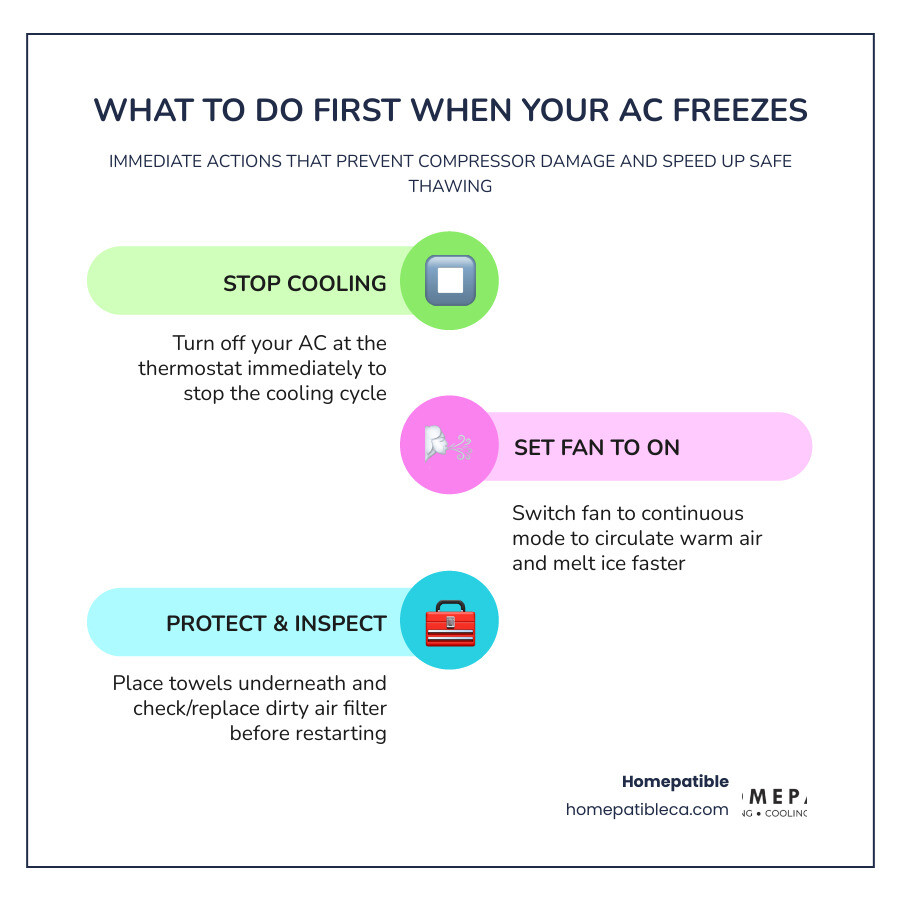
Ice Forming on Your AC Unit Causes and What to Do First
When you walk out to your backyard in Montecito or Carpinteria and see a literal block of ice encasing your air conditioner, it’s natural to feel a bit of panic. However, the actions you take in the first few minutes can mean the difference between a simple filter change and a total system replacement.
The very first thing we tell our clients is to stop the cooling cycle. If you continue to run the AC, the ice will only get thicker. This creates a "snowball effect" where the ice acts as an insulator, preventing the refrigerant from absorbing any heat, which in turn makes the coils even colder. This leads to liquid refrigerant "slugging" back to the compressor. Since compressors are designed to squeeze gas, not liquid, this can destroy the heart of your AC system in up to 40% of untreated cases.
Ice Forming on Your AC Unit Causes and What to Do in the First 10 Minutes

- Thermostat to OFF: Go to your thermostat and switch the system from "Cool" to "Off." This stops the flow of refrigerant immediately.
- Fan to ON: Switch the fan setting from "Auto" to "On." This keeps the indoor blower motor running, which pushes warm indoor air across the frozen evaporator coils to help them melt.
- Contain the Water: As that ice melts, it has to go somewhere. If your condensate drain is also frozen or clogged, water may spill over the drain pan. Place towels or a shallow bucket under the indoor unit (usually located in a closet, attic, or garage) to protect your flooring.
- Inspect the Filter: Pull out your air filter. If you can’t see light through it, it’s a major part of the problem.
- Open the Vents: Walk through your home and ensure every single supply vent and return grille is open and clear of furniture or drapes.
How to Safely Thaw a Frozen AC Unit Without Causing Damage
Thawing is a test of patience. Depending on the thickness of the ice, it can take anywhere from 1 to 24 hours to melt completely. While you might be tempted to speed things up, you must be careful.
The safest way to thaw the unit is naturally, using the system's fan to circulate air. If you are in a hurry, you can use a hairdryer, but only on a low or medium heat setting. Keep the dryer at least six inches away from the delicate aluminum fins of the evaporator coil. Never use a high-heat industrial heat gun, as the intense heat can actually melt the solder joints in the copper refrigerant lines, leading to a much more expensive leak.
What Not to Do When Your AC Freezes
We have seen it all on the Central Coast, and there are a few "DIY fixes" that consistently lead to disaster:
- Do not use sharp tools: Never try to chip, scrape, or chisel the ice off the coils with a screwdriver or knife. The copper tubing inside those coils is incredibly thin. One slip and you’ll puncture the line, releasing all the refrigerant and potentially ruining the coil.
- Do not force a restart: If there is still a sliver of ice on the coils and you turn the cooling back on, the freezing process will start all over again instantly.
- Do not ignore the water: Melting ice can cause significant water damage to drywall and flooring if not monitored.
The Most Common Reasons AC Units Freeze Up
Understanding ice forming on your AC unit causes and what to do starts with the physics of how your home stays cool. Your AC doesn't actually "create cold"; it removes heat. It does this by blowing warm indoor air over very cold evaporator coils. If anything disrupts this heat exchange, the coils drop below 32°F, and the moisture in the air (humidity) flashes into ice.
Why Restricted Airflow Freezes the Evaporator Coil
Airflow is the lifeblood of your HVAC system. If the cold refrigerant in the coils doesn't have enough warm air to "drink," it stays too cold.
- Dirty Air Filters: Statistics show that a dirty air filter is the leading cause of frozen AC coils in over 60% of reported cases.
- Blocked Vents: If you close off more than 20% of the vents in your home to "save energy," you are actually choking the system. Nearly 50% of homeowner-reported problems involve blocked vents or restricted airflow.
- Dirty Coils: Over time, dust bypasses the filter and coats the evaporator coil, acting as an insulating blanket that prevents heat transfer.
For more information on keeping your system clean, check out our AC Maintenance Tune-Up services.
How Low Refrigerant Creates Ice on AC Lines and Coils
It sounds counterintuitive — how does less cooling fluid lead to more ice? It comes down to pressure. When refrigerant levels drop due to a leak, the pressure inside the system falls. According to the laws of physics, as pressure drops, so does temperature. The remaining refrigerant becomes much colder than it’s supposed to be, causing the coil to freeze the condensation on its surface.
Low refrigerant levels account for approximately 25-30% of AC freezing issues. If you hear hissing or bubbling sounds coming from your unit, you likely have a leak. Because refrigerant is a hazardous substance, this requires a certified AC Repair Service to find the leak, seal it, and recharge the system.
Less Obvious Causes Homeowners Often Miss
Sometimes the cause isn't inside the machine at all.
- Thermostat Placement: If your thermostat is in a drafty hallway or directly under a sunny window in Santa Maria, it may misread the temperature and keep the AC running long after the house is cool, leading to a freeze.
- Outdoor Temperatures: If you try to run your AC when it’s below 60°F outside (which can happen during our cool Central Coast nights), the system isn't designed to handle the pressure balance, and the coils will likely freeze.
- Blower Motor Failure: If the fan that moves the air is spinning too slowly or has a failing capacitor, you won't get enough airflow to keep the coils warm.
How to Diagnose Ice Forming on Your AC Unit Causes and What to Do Next
Diagnosis is about observation. Before you call us, take a look at the symptoms. Are the copper lines outside covered in white frost? Is there a puddle of water around your furnace in the garage? These are clear indicators of a freeze-up.
| Symptom | Likely Cause |
|---|---|
| Weak airflow but very cold air | Dirty filter or blocked vents |
| Normal airflow but warm air | Low refrigerant or leak |
| Hissing sounds + Ice | Refrigerant leak |
| Ice forms only at night | Low outdoor temps or thermostat issue |
| Water leaking from unit | Clogged drain or melting ice |
Signs the Problem Is Likely Airflow-Related
If you find that your air filter is black with dust or your return grilles are covered in pet hair, you’ve likely found your culprit. Airflow issues usually manifest as a gradual decline in cooling power. If you’ve recently done a home remodel in Goleta, construction dust may have clogged your coils or filters much faster than usual.
Signs You Need a Professional HVAC Technician
While homeowners can change a filter, many other issues require specialized tools. You should call a professional if:
- Ice returns within 24 hours of a full thaw and filter change.
- You see oil stains near the refrigerant lines (a sign of a leak).
- The blower fan isn't spinning at all.
- Your system is "short-cycling" (turning on and off every few minutes).
Regular professional care can prevent these headaches. Our AC Maintenance Tune-Up program is designed to catch these small issues before they turn into ice blocks.
Should You Repair or Replace an Older Freezing AC?
If your system is more than 10–15 years old and uses R-22 refrigerant (which is being phased out and is very expensive to replace), a major freeze-up might be the sign it’s time to move on. Constant leaks in an old evaporator coil are often not worth the cost of repair. In these cases, we often recommend an AC Installation Replacement to provide better efficiency and reliability for your Gaviota or Santa Barbara home.
How to Prevent Ice Buildup on Your AC in the Future
The best way to deal with a frozen AC is to never let it freeze in the first place. Professional HVAC maintenance performed annually reduces frozen coil incidents by a staggering 70%.
Maintenance Tasks That Prevent Recurring Freeze-Ups
To keep your system running smoothly across the Central Coast, we recommend the following:
- Change filters every 1–3 months: This is the single most important task for any homeowner.
- Annual Coil Cleaning: Have a pro clean the evaporator and condenser coils to ensure maximum heat transfer.
- Check Drain Lines: Ensure your condensate drain is clear to prevent water backup.
- Refrigerant Monitoring: During a tune-up, we check the "sub-cooling" and "super-heat" levels to ensure your refrigerant charge is perfect.
Smart Habits That Help Your AC Stay Ice-Free
We are Licensed Nest Pro Elite technicians, so we love smart home tech, but it has to be used correctly.
- Set Realistic Temps: Avoid setting your thermostat to 60°F in an attempt to "cool the house faster." It doesn't work that way; it just makes the system run longer and increases the risk of a freeze.
- The 68-Degree Rule: Try not to set your AC below 68°F on especially humid days.
- Seal Your Ducts: Leaky ducts in your attic can pull in dust or lose the very air needed to keep the system balanced.
Outdoor Unit and Indoor Airflow Checks Homeowners Can Do
Your outdoor unit needs to breathe, too. Ensure there is at least a two-foot clearance around your condenser. Trim back any Santa Barbara bougainvillea or coastal scrub that might be encroaching on the unit. Also, check the "fins" on the outdoor unit; if they are clogged with dirt or "cottonwood" seeds, the whole system has to work harder, which can contribute to indoor freezing.
Frequently Asked Questions About Ice Forming on Your AC Unit Causes and What to Do
How long does it take for a frozen AC unit to thaw completely?
Typically, it takes 1 to 4 hours if you run the fan-only mode. However, if the ice has formed a solid block inside the cabinet, it can take up to 24 hours. Never try to restart the cooling until you are certain all ice is gone.
Can I use a hairdryer to melt ice on my AC?
Yes, but use caution. Keep it on a low heat setting and keep your distance. Never use a heat gun or any open flame.
What if ice keeps coming back after I change the filter and thaw the unit?
This almost always points to a refrigerant leak or a failing blower motor. If a simple filter change doesn't fix it, you need a professional diagnosis to prevent compressor damage.
Does a frozen AC cause permanent damage?
It can. If the ice causes liquid refrigerant to enter the compressor, it can lead to mechanical failure. Additionally, the moisture from melting ice can lead to mold growth or water damage if not handled properly.
Conclusion: Get Reliable Help Before a Frozen AC Turns Into Major Damage
At Homepatible, we know that a broken AC in the middle of a Santa Barbara summer isn't just an inconvenience — it's a disruption to your family's comfort and safety. Understanding ice forming on your AC unit causes and what to do is the first step, but the second step is ensuring the repair is done right the first time.
Whether you need a quick AC Repair Service in Los Berros or a full system AC Installation Replacement in Gaviota, our team of licensed experts is ready to help. We provide 24/7 emergency service and transparent pricing across Santa Barbara and San Luis Obispo Counties.
Don't let a little ice turn into a big bill. If your system is acting up, contact us today for a comprehensive inspection. Let's get your home back to the comfortable sanctuary it should be.
Ready to take the next step?
Our certified technicians are ready to help with all your home service needs. Schedule a service today.
Schedule My ServiceRecent Posts
Related Articles
Ready to Get Started?
Whether you need a repair, maintenance, or a new system, our expert team is here to help.